This entails reducing barriers to entry for legal businesses, ensuring fair pricing, and improving the availability of essential goods and services in underserved communities. By offering viable and attractive legal alternatives, authorities can undercut the black market’s appeal and provide consumers with safe and ethical choices. Due to man’s inherently entrepreneurial nature, coupled with government’s pesky tendency to regulate, black markets can and do exist everywhere.
Technological Advancements And Online Black Markets
More international partnership took hold in 2008 with the Declaration of Istanbul (DOI), created to further influence government compliance. The main sponsors are The Transplantation Society and the International Society of Nephrology. Unlawful or unethical transplantation is aided by an inconsistently regulated online world, said Michael Falls, a data collection and technology manager at the Anti-Human Trafficking Intelligence Initiative. “A living donor should not be compensated financially as a motivation for organ donation. And similarly, a deceased donation should be a volunteer situation because otherwise it becomes a market.”
- If you are purchasing a new stereo, for example, from an individual at an extremely low price, there’s a good chance that it’s been stolen.
- For example, in some countries, alcohol is banned, while other nations encourage legal brewery, distillery, and distribution operations.
- At the beginning of the twenty-first century, one of the fastest-growing areas of black-market activity was in the computer industry.
- The largest underground financial market exists for currencies in nations with strict currency controls.
Global Examples Of Trade-Related Black Market Activities
An example of an illegal or black market would be the human trafficking market that engages in the capture of people throughout the world and their sale into various areas, such as forced labor and prostitution. A black market can be a physical market where two individuals meet to exchange illegal goods—for example, a drug transaction on a street corner. A black market can also exist online, such as on the dark web, where individuals communicate to exchange goods and payments are made in digital currencies.
Black Money: Definition, Impact, And How It Works
These markets lack government oversight, as participants conceal their behavior from authorities to avoid detection and penalties. As per Jens Beckert, director of the Max Planck Institute for the Study of Societies (MPIfG), the sheer volume of the illegal market is of great social and economic interest. Indirectly, a study into such a system also allows an understanding of the legal markets.
Link Between Trade-Related Black Market And Money Laundering
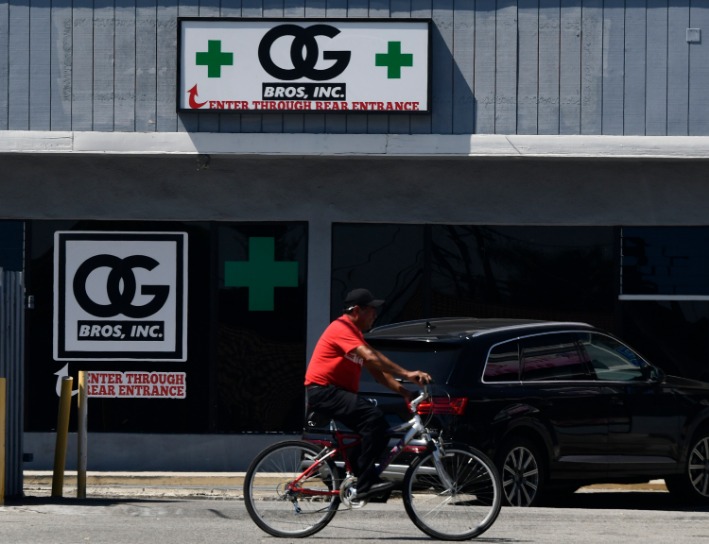
In part to help legal operators compete, New York City has been cracking down on unlicensed marijuana retail stores. California officials say they seized nearly $200 million worth of illegally grown cannabis last year. Some smaller private employers might use the shadow economy to make their lives easier. Avoiding the government means circumventing government regulations related to employee benefits, withholding and submitting required taxes, working conditions, and safety regulations, not to mention a great deal of regulatory paperwork. Following are the top ten countries with the largest Illegal markets in the world, discussed in the light of net estimated worth of the economy of this underground market.
Addressing A Complex Crime
Illicit trade is highly disruptive, of course, to legitimate businesses — except when it isn’t. For as we shall see, there is an enormous gray area between legal and illegal transactions, a gray area that the illicit traders have turned to great advantage. Laughable as they may seem, little separates these scams from others with far more dire consequences. A black market refers to a marketplace or system of exchange that subverts official government regulations. Often referred to as the underground economy, it is economic transactions that are illegal or are non-compliant behaviors within a set of rules or laws. A black market is distinct from a grey market, which is the legal trade of goods through channels that are unofficial or unauthorized.

Inside The Chinese-funded And Staffed Marijuana Farms Springing Up Across The US
But, they can create jobs for people who can’t find employment in traditional markets and provide healthcare to people who can’t access it. The black market (also called the underground, unofficial, or shadow economy) refers to an area of economic activity where the buying and selling of goods and services is conducted illegally. Many goods and services are simply illegal to sell; examples include cocaine, assault rifles, prostitution, the body parts of endangered animals, fake passports, and bootlegged (illegally recorded) CDs and DVDs. When people desire goods that they cannot obtain simply by going to a store and purchasing them, they are often willing to pay very high prices to anyone who can provide them. Correspondingly, many merchants and individuals are willing to risk breaking the law in order to earn substantial profits from selling contraband.
Items Sold In Black Markets

The Illicit Tobacco Taskforce destroyed more than 264 tonnes of illicit tobacco since it was established in 2018. To this day, police are still detecting — and destroying — illegal tobacco, often concealed among other crops like this one, worth $20 million, near Parkes in New South Wales. What’s happening in the states that already allow recreational marijuana offers a startling glimpse at what it might actually look like to fully legalize the drug across the US. “Not surprisingly, patients continue to explore any means necessary, often outside their country or continent, to achieve access to kidney transplantation which has led to a growth in ‘transplant tourism,'” the report reads.
Are There Legal Consequences For Participating In Black Market Activities?
Non-state actors offshore West Africa, Bangladesh or Indonesia take advantage of loopholes created by international law and the law of the sea. Transfer of illegal fuel is often done ship to ship on neutral waters – with one ship commercially legal, recognized as carrying legitimate imports at the final port of destination. Thus, illegal crude from countries such as Libya or Syria finds its way to EU markets. Recently Russian ships have been found involved in smuggling oil products to North Korea through ship to ship transfers. States engaged in total war or other large-scale, extended wars often impose restrictions on the use of critical resources that are needed for the war effort, such as food, gasoline, rubber, metal, etc., typically through rationing.
The black market is not a physical place, but rather an economic activity in which merchandise and/or services are bought and sold illegally. Also called the “underground market,” this market gets its name due to the fact that its activity is conducted out of sight and often “in the dark,” outside the sight of law enforcement. It can be illustrated by something as innocent and innocuous as selling gum on the playground, or by something as serious as the sale of smuggled weapons or drugs. A black market is an illegal trading system where goods or services are exchanged in a covert manner, typically in violation of government regulations. This market often arises in response to government-imposed restrictions, such as price controls, rationing, or outright bans on certain products. Buyers may turn to the black market to avoid high taxes, obtain scarce items, or access prohibited goods.
The black market or underground market is economic activity involving the buying and selling of merchandise or services illegally. The goods themselves may be illegal to sell (such as weapons or illegal drugs); the goods may be stolen; or the goods may be otherwise legal goods sold illicitly to avoid tax payments or licensing requirements (such as cigarettes or unregistered firearms). The term black market also applies to illegal currency exchange outside the authorized institutes (banks or legal exchange offices). It is so called because “black economy” or “black market” affairs are conducted outside the law, and so are necessarily conducted “in the dark,” out of the sight of the law. Black markets develop when the government places restrictions on the production or provision of goods and services.
Illicit drug trade involves the production, distribution, and sale of illegal substances. This black market activity includes drugs such as cocaine, heroin, methamphetamine, and synthetic drugs. The illegal drug trade poses significant social, economic, and health risks, fueling addiction, violence, and organized crime.