
The IDW is a nexus of commentators that emerged in the 2010s to challenge the solidifying “woke” consensus on topics such as gender and academic freedom. Usually emphasising rationality, open debate and free speech, this caucus sought to defend the classical liberal worldview in an increasingly censorious and “post-truth” climate. But this typically did not include much consideration of the enabling terms of thought or discussion itself — least of all, of the media within which these take place. It’s a shocking statement that really could be quite dangerous when it comes to safety measures and policy decisions. It diminishes the behavior fueling power of something like “belief.” But it also may not be as absurd as its first impression gives. I am conceiving “a belief” as a kind of internal narrative which has risen to the point of unquestioned personal allegiance.
A Higher Thing Than History
- Frustrated by the failure of their movements to destabilize American society, Kimball claimed, they channeled their discontent into “politically motivated” fields like queer theory or African-American studies, said to be inspired by “postmodern” Continental thinkers like Michel Foucault and Jacques Derrida.
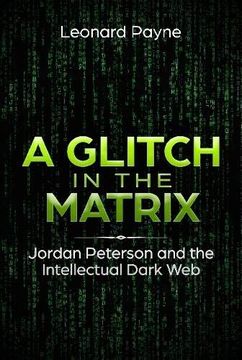
- Jamie Q. Roberts has written a valuable intellectual history for non-intellectuals.
- “Woke capitalism” is a concept that circulated within the intellectual dark web.
- Some of the people mentioned in it, such as Sam Harris, have already distanced themselves from IDW to maintain their intellectual independence.
- He’s a classical liberal who got caught up in a thing, and it’s a ministry.
This was reinforced by individual intellectual incentives to cultivate contrarianism for the sake of fame, or, as Kitcher describes it, the “temptation to gain a large audience and to influence public opinion by defending ‘unpopular’ views” — views that, in truth, mirrored widespread societal prejudices. Yet no matter how wrong, shameless, or moronic the unintellectual dark web becomes, it continues to gain steam. If conservatism is to survive, let alone flourish, then we have a simple choice to make. We must embrace the principles that gave rise to the intellectual dark web and dump, once and for all, the principle-free world of the unintellectual dark web that values nothing but clicks and cash. This thirst explains how Carlson dismissed those caring about Oct. 7 as being obsessed with “foreign” matters before traveling to what seems like every country in the world to extol their virtues, fictional or otherwise. This thirst explains how Johnson, a Christian husband and father, embraced and emulated Andrew Tate, a Muslim pimp and self-professed abuser of women, before defending himself by misappropriating a Bible verse.
Today’s Left Needs To Learn From Christopher Hitchens
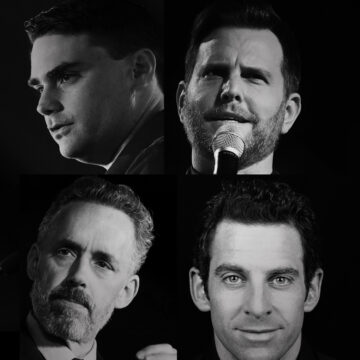
Google is a very dangerous entity if it decides to take an active role in controlling what conversations can happen, and Google has told us that at the very top, it is actually interested in seeing some conversations silenced. That should worry us at least as much as what’s going on on college campuses, which is itself not a small matter. Whatever the adjectives, it’s a group of people, many of them familiar to Reason readers, who are interested in free speech and free thought, sensitive to intellectual conformity, and adept at using new media to route around hostile gatekeepers. Their ranks are generally said to include Jonathan Haidt, Dave Rubin, Jordan Peterson, Sam Harris, Ayaan Hirsi Ali, Claire Lehmann, and James Damore. The intellectual dark web championed free speech as the pathway to truth. The 1960s saw the rise of poststructuralism, which led to postmodernism from the 1980s.
The Policemen Of Cultural Appropriation
Roberts describes the spirit of Wokeness as a “Slave Morality” of binary, black-and-white thinking characterised by vengeance. “Some in the IDW think that this virus is a civilisation-level threat,” Roberts writes. Put simply, “in the Postmodern tradition, problems come from discourse and are thus solved by changing discourse”—that is, ‘no debate’.
Meet The Renegades Of The Intellectual Dark Web The New York Times
Outside of the academics and activists whose ideology came to dominate the West in the second decade of the twenty-first century, arguably no group influenced public discourse as much as the Intellectual Dark Web.
Intellectual Dark Web: Reading The Cancelled History Of A Prohibited Debate
THE FIRST DISTINCT intellectual movement to have emerged during the Trump presidency is not the alt-right, which rose to prominence during the 2016 campaign. Nor is it democratic socialism, the egalitarian platform that many young progressives have embraced since the Occupy Wall Street movement. After Bush failed against Democrat Bill Clinton (who had led a libertarian insurgence in the Democratic party) Republicans rebranded once again, this time with the “Contract with America,” which bundled together poll-tested ideas to regain political ground in 1994. Once in office, however, the document’s architect, Speaker of the House Newt Gingrich, unveiled his true radicalism through gigantic budget cuts and government shutdowns which enabled Clinton to easily win reelection in 1996, even though Republicans held onto Congress. Whether or not Liu makes any progress in bringing the American barbarians around, his ideas and jargon remain present and potent on the Chinese-language internet. He’s mostly flown under the radar of internet censorship, with his collected Douban posts still circulating on the platform, through the Dōngchuāndòu 冬川豆 Weibo account, and there is lively discussions of his philosophy on the Zhihu message board and the Zhuanlan 专栏 blogging service.
A few years later, he returned to the United States, which he began treating as a satanic force following the Supreme Court’s Roe vs. Wade decision which established a national right to abortion. “The Catholic Church in America must break the articles of peace, she must forthrightly acknowledge that a state of war exists between herself and the American political order,” Bozell’s magazine, Triumph, proclaimed. Dennis Prager, the reactionary radio host and founder of video propaganda mill PragerU, described the strategy explicitly during a conversation with Dave Rubin, a podcaster who now identifies as right-wing, but was pretending to be progressive when he was included in Weiss’s article. Regarding Harris’ career-making endorsement of Rubin—the evidence was always in plain sight that Rubin’s utility was serving as a professional sycophant—a hype-man armed with a thin intellect and possessing no actual political convictions.
Crimes Of The Times: Inside Man: A Jailer Turns Informant
The New Republic — which Ta-Nehisi Coates has asserted had perhaps two black staff writers or editors in its heyday and was certainly overwhelmingly white — is now being edited by the leftist multicultural barbarians. Slate has moved away from reflex contrarianism toward a more robust liberalism. And William Saletan, to his genuine credit, has written a serious mea culpa for his previous flirtations with race-IQ theorizing. Arthur Schlesinger, for example, feared that multiculturalism might weaken America’s vital center (although he also acknowledged the cultural threat from the right). Structural arguments about the oppression of black people and women didn’t often make it into mainstream publications. The Intellectual Dark Web exists because many still venerate objective truth.
The Power Of Common Knowledge: Steven Pinker On Language, Norms, And Punishment
We can’t put blinders on certain corners of the world and expect to come out with a proper understanding of how it functions. What these individuals have in common is that, in the pursuit of truth and free expression, they offended arbiters of politically correct opinion. These thinkers are the new heretics who challenge the religious convictions of society and they are excommunicated in the same way that those who went against the church once were.
In absolute terms, dark web intellectuals enjoy far more access to the mainstream than genuine leftists. But in relative terms, they have far lower status than their intellectual forebears of 20 or even 10 years ago. They are not driving the conversation, and sometimes are being driven from it. This loss of relative social status helps explain the anger and resentment that Weiss describes and to some extent herself embodies. Defectors from academia are generously represented here, but the concerns of the intellectual dark web go far beyond performative wokeness on college campuses or Twitter pile-ons in the name of social justice.
If you are entering a dark conversation you ought to be extremely familiar with these implications. The political risk of igniting or becoming a harmful mob is part of the moral responsibility which is inherent to the darkness. The same can be said for criticizing the lionized names of the Black Lives Matter movement or calling out problems with common ideas about gender and sex.
What Is The ‘Intellectual Dark Web’?
The IDW defined itself against the ascendant culture of ‘no debate’, and Rogan hosted those forbidden debates. In time, these boundaries may solidify as some thinkers renounce the movement and others join it, as some ideas are rejected and others sanctioned. If that happens, we may be able to revisit this question for a clearer answer. If not, then the Intellectual Dark Web will likely be relegated to the cultural closet alongside other trendy, but ultimately fruitless, fads. Today, the radio waves have simply been replaced by YouTube, podcasts, and social media, platforms that can reach much larger audiences than the AM signals of yesteryear. In fact, as Pullmann points out, Rogan, Peterson, Shapiro, and Rubin have a combined reach that competes with Fox News and legacy media such as the Times and the Washington Post.